

Forage
French Chemise SlowStitch Workshop Winter School 11/12 July
French Chemise SlowStitch Workshop Winter School 11/12 July
Couldn't load pickup availability
Come and enjoy some cozy stitching at our Winter School in the Belrose studio!
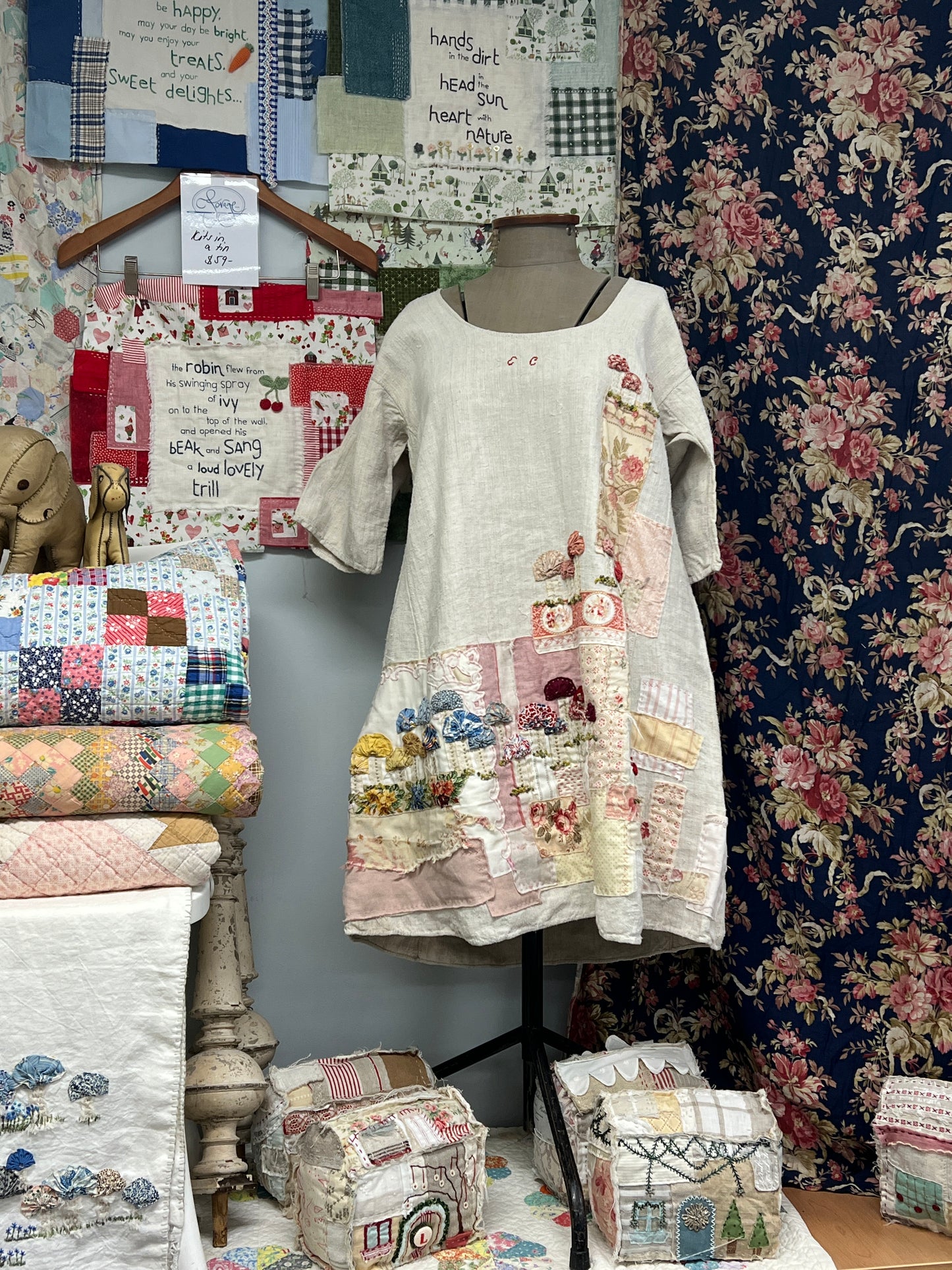
We’re going to use one of our favourite finds from the French flea markets as the base for this SlowStitching project - authentic antique convent nighties.
Often made by the nuns from linen and hemp during the 18th, 19th and early 20th century these nighties are simple and rustic with varying charming details such as scalloped edges along the neckline or perhaps an elegant monogram either in the centre or over the heart.
We’ll take this beautifully simple blank canvas and embellish it with fabric, stitching, and other notions to create a unique decorative piece.
You'll choose a warm or cool colourway for the antique/vintage fabrics, charms, buttons and embellishments you'll use on your authentic convent nightie sourced from France.
Please note the nighties are vintage and purchased from French markets, brocantes and dealers; therefore, students can not specify a particular size. You are welcome to swap with classmates but they are for display and not wardrobe.
The workshop includes all materials including the antique chemise - you'll just need scissors, pins, needles and basic supplies. Of course if you have some special foraged finds that you would like to include, please bring them along!
CLASS NUMBERS ARE LIMITED DUE TO THE SIZE OF THE PROJECT and THE LIMITED AMOUNT OF CHEMISES ON HAND
Details:
Two day class: Saturday 11 and Sunday 12 July 2026
10am - 3pm
The Forage Studio, 39/7 Narabang Way, Belrose
Morning/Afternoon Tea and Lunch provided.
Location: Our Studio: 39/7 Narabang Way, Belrose, NSW, 2085
Forage In-House Class Terms and Conditions:
*Booking price includes 2 workshop days plus materials kit, morning tea and lunch.
*Places are limited due to there being a finite amount of kit items.
*Classes are strictly non-refundable, however they are transferrable if you are able to find someone to take your place. If you are unable to make the class, we will be able to send you the materials kit.
About French Chemises:
Vintage French chemises are among the most beautiful and useful antique textiles to collect. Traditionally, a chemise was the simple linen garment worn next to the skin beneath dresses and outer clothing. The word itself comes from the French word for “shirt.” For centuries, French women wore chemises as their primary undergarment, protecting expensive outer garments from sweat and body oils. They were usually made from handwoven linen because linen could withstand frequent washing and boiling.
In the 18th and 19th centuries, women throughout Alsace wore a linen chemise directly against the skin beneath skirts, bodices, aprons, and jackets. Like chemises elsewhere in France, they were usually made from homespun linen and cut from simple rectangles and gussets to minimize fabric waste.
One characteristic of traditional Alsatian dress was the prominence of the chemise sleeves. Contemporary descriptions of women’s costume mention very full, bright-white sleeves extending to the wrists and visible beneath the bodice. These sleeves were often finely gathered and carefully laundered, becoming a visible sign of cleanliness and household skill.
Unlike some regions of France where chemises were largely hidden, in Alsace the sleeves and neckline frequently formed part of the overall costume appearance. Wealthier families sometimes decorated collars and cuffs with whitework embroidery, drawn-thread work, or fine pleating, while rural examples remained simpler and sturdier.
Many surviving Alsatian chemises bear embroidered initials. These were often prepared as part of a young woman’s trousseau (dowry linen collection), which could include dozens of household textiles and garments. Red cross-stitch monograms are especially common on 19th-century Alsatian linens and can help identify the original owner. The region’s strong tradition of domestic needlework means that even everyday garments often display exceptionally neat hand sewing.